
Under Your Feet: How Residential Geothermal Heating and Cooling Works
When we talk about renewable energy, the first things that come to mind are often sun-drenched solar panels or towering wind turbines. However, one of the most efficient, sustainable, and reliable sources of energy is located just a few feet under your lawn.
Residential geothermal heating and cooling systems (also known as ground-source heat pumps) use the stable temperature of the earth to heat and cool homes efficiently year-round, and are a gamechanger for reducing residential energy usage and lowering your carbon footprint. But how exactly does the ground keep your home warm in January and cool in July? Let’s dive into the fascinating, eco-friendly science of geothermal energy.
The Power of Constant Underground Temperatures
While the air temperature above ground changes wildly from season to season, the temperature of the earth just 6 feet below the surface remains relatively constant, around 55°F (13°C). In winter the ground is warmer than the outside air and in summer the ground is cooler than the outside air. Geothermal systems harness this natural, thermal stability to provide consistent, year-round comfort.
The Three Core Components of a Geothermal System
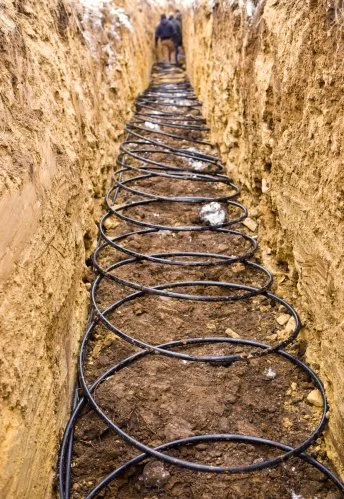
Geothermal systems aren’t designed to generate heat; instead, they simply move heat, which makes it incredibly efficient. A geothermal system consists of three main parts:
The Ground Loop System: a series of high-density polyethylene pipes buried in your yard (either vertically or horizontally) or placed in a nearby pond.
The Heat Pump Unit: located inside your home, this unit acts as the "heart" of the system, using a compressor and refrigerant to transfer heat between the loop and your home.
The Distribution System: traditional ductwork (forced air) or hydronic piping (radiant floor heating) that delivers the heating or cooling (depending on season) throughout your home.
How It Works: Heating Your Home in the Winter
Instead of burning fossil fuels to generate warmth, a geothermal system pulls heat from the earth.
Step 1: A water-based solution circulates through the buried loop absorbing the earth's warmth
Step 2: This warmed fluid travels to the indoor heat pump
Step 3: The heat pump concentrates this energy, increasing the temperature significantly
Step 4: The heat is distributed throughout your home via your ductwork
How It Works: Cooling Your Home in the Summer
In the summer, the process reverses to provide cooling.
Step 1: The heat pump extracts heat from your indoor air
Step 2: This heat is transferred to the liquid that circulates in the ground loop
Step 3: The warmed fluid circulates through the buried loop releasing heat into the cooler earth
Step 4: The cooled fluid returns to the heat pump to continue keeping your home comfortable
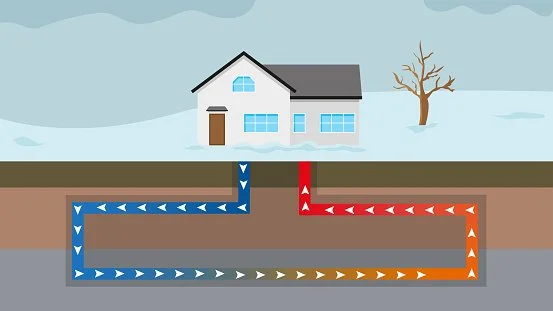
How a residential geothermal system works in the winter
Benefits of Residential Geothermal Systems
Unmatched Efficiency: Geothermal systems produce 3 to 5 units of energy for every 1 unit of electricity they consume, reducing energy usage by up to 70%.
Significantly Lower Utility Bills: Because geothermal systems are so efficient, they can save 30% to 70% on annual heating and cooling costs.
Environmental Responsibility: With no combustion involved, geothermal systems produce zero on-site greenhouse gases.
Long Lifespan: The indoor components typically last 20–25 years, while the underground loops are thought to have a lifespan of up to 100 years.
Safety & Silence: There is no risk of carbon monoxide, gas leaks, or fire from a furnace, and the system operates very quietly.
No Above Ground Outdoor Equipment: Geothermal systems eliminate the air conditioning or heat pump unit(s) required for the operation of traditional heating and cooling systems. Additionally, the typical wells utilized for geothermal systems are capped off 6-feet below the surface and not visible.
Reduced Summer Peak Electrical Demand: Geothermal systems reduce the peak summer electrical demand by roughly 50%. Reducing peak summer demand is much needed to extend the lifetime of the current grid and avoid costly grid upgrades.
Combining Geothermal with Geothermal Renewable Energy Credits (GRECs)
Geothermal systems reduce the average home's carbon footprint by 10,000 pounds of carbon dioxide per year, which is the equivalent of removing one car from the road. Some states recognize the environmental contribution of geothermal systems and have created Geothermal Renewable Energy Credit (GREC) programs to monetize their environmental benefit.
In Maryland and Virginia, geothermal systems qualify for Geothermal Renewable Energy Credits (GRECs), which homeowners can sell to utilities. These credits provide an additional financial return for choosing renewable heating and cooling. ClearPath Renewables helps homeowners and businesses gain the most value from the Maryland and Virginia GRECs program.
Pairing Geothermal Systems with Solar Systems
By upgrading to a geothermal system, you are not only saving money but also making a long-term, sustainable choice for the planet. And because geothermal systems are electrified, they pair perfectly with solar systems to reach "net-zero" energy goals. By carefully pairing geothermal with solar, you’re making investments in your home, your future finances, and the planet. Plus, if you’re considering a residential geothermal system in Maryland or Virginia, ClearPath Renewables can help you understand how the technology works and how to maximize available GRECs incentives.